The gentle giant with three horns
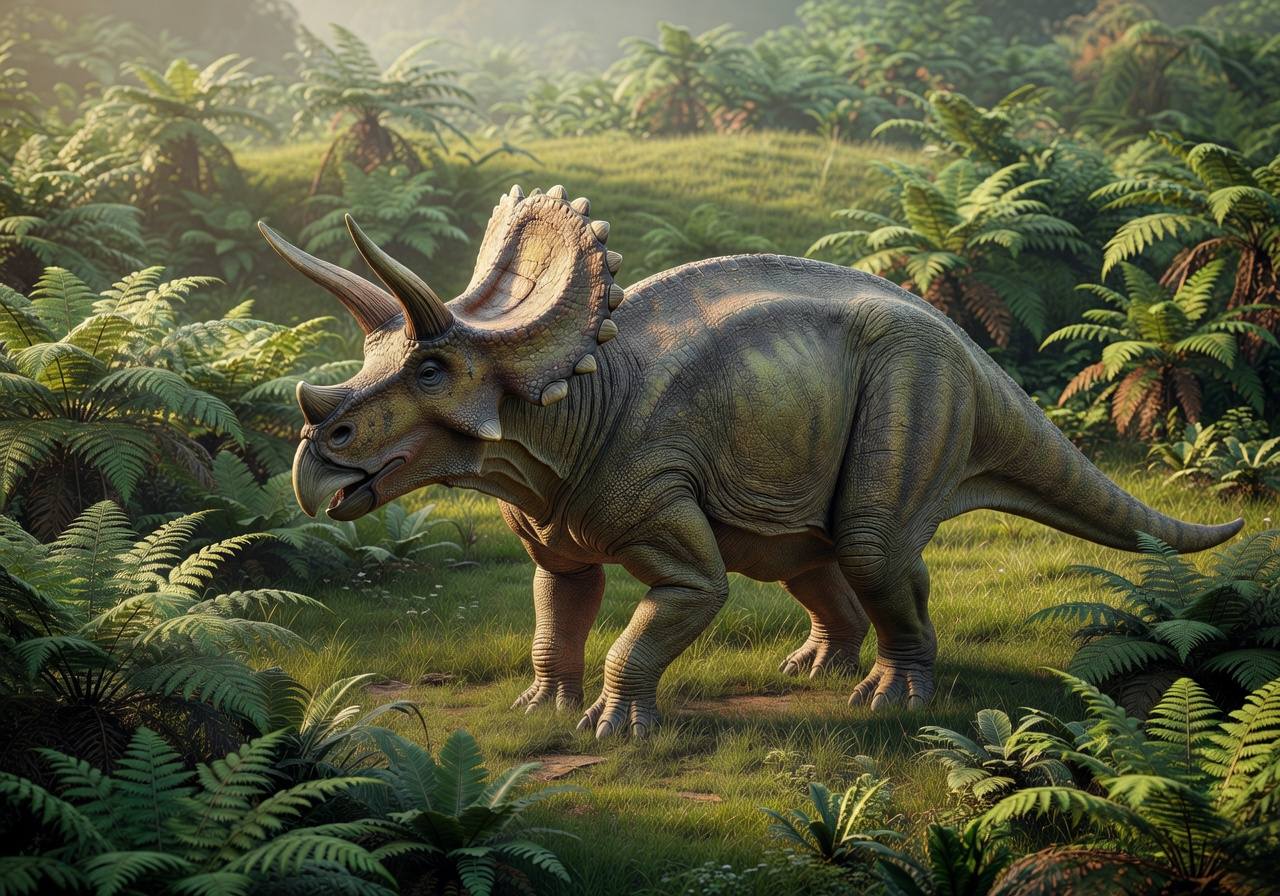
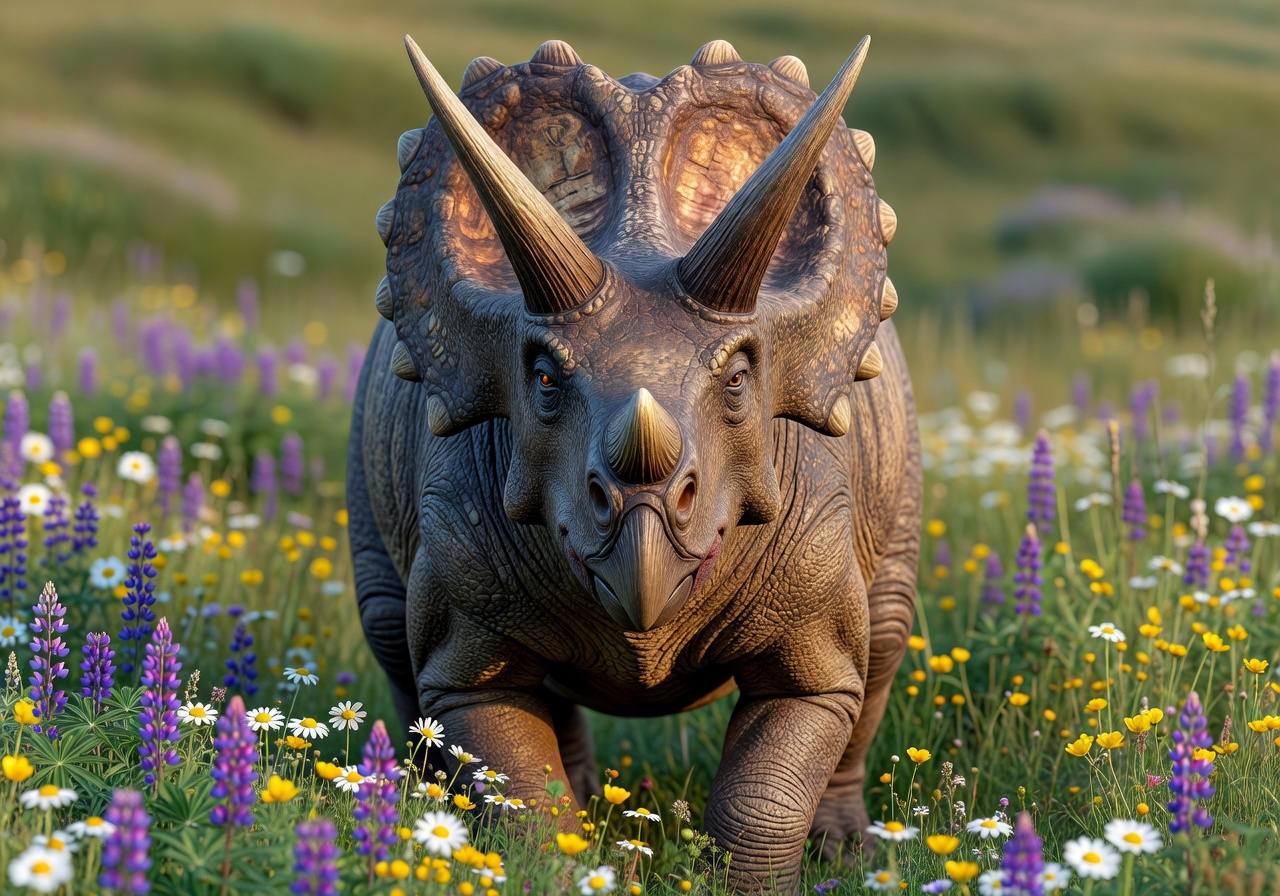
Triceratops is one of the most recognizable and abundant dinosaurs from the final chapter of the Cretaceous. Its dramatic horns and enormous bony frill gave it a fearsome appearance, yet these structures were likely used primarily for display, species recognition, and ritualized combat between males rather than defense.
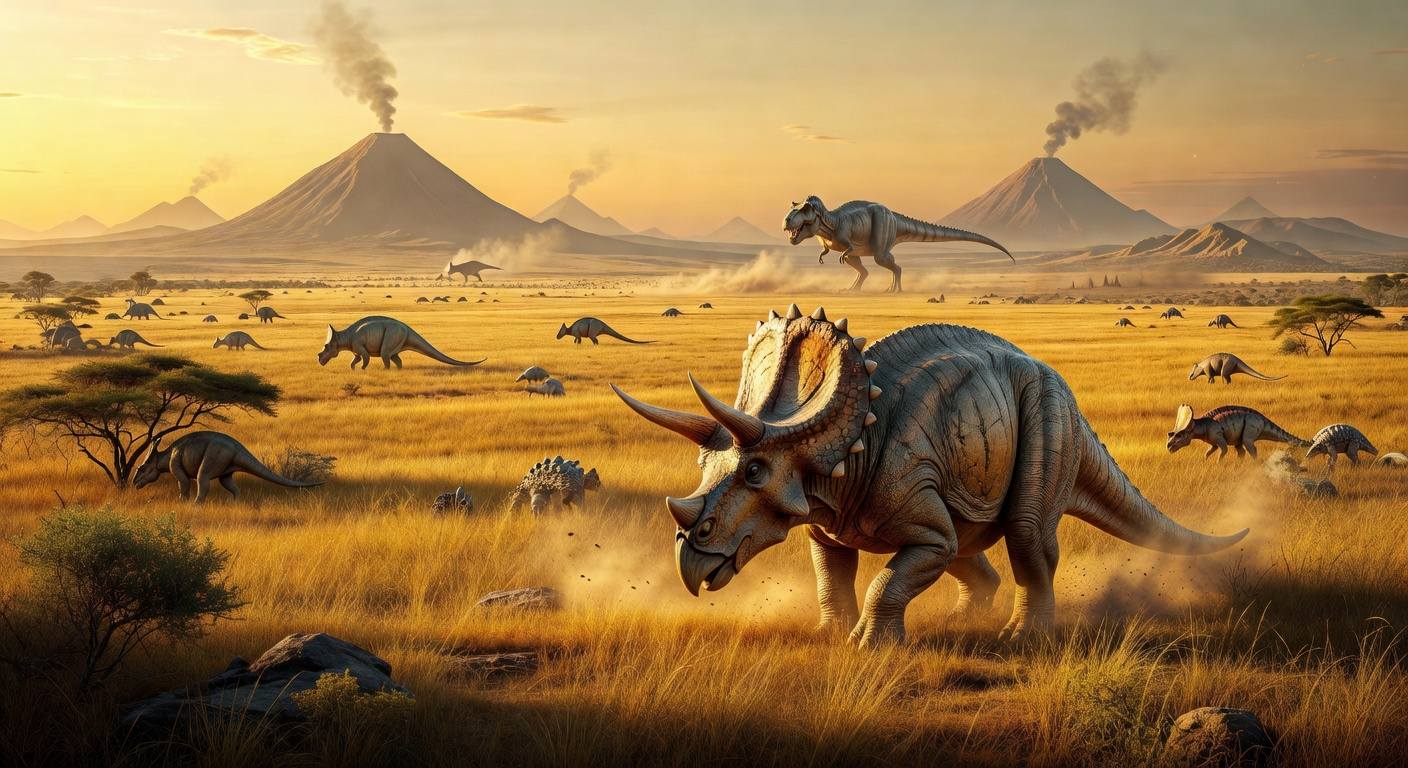
With a powerful beak and hundreds of teeth arranged in dental batteries, Triceratops could process the toughest vegetation. It lived in small herds and shared its world with the terrifying Tyrannosaurus rex. Many Triceratops bones show healed bite marks from T. rex attacks — proof that these two titans regularly encountered one another.
- • The skull could reach over 2.5 meters long — the largest of any land vertebrate.
- • Its beak and teeth were perfectly adapted for slicing fibrous palm fronds and ferns.
- • The frill contained large openings covered in skin that may have displayed vivid colors.
- • Often found in groups, suggesting social or herding behavior.
Triceratops herd at dusk
A peaceful 9-second reconstruction of a Triceratops herd grazing in a flowering Late Cretaceous meadow.
Gallery
Habitat
Lived across the coastal plains and woodlands of the western interior of North America. Preferred areas with abundant low-growing vegetation near rivers.