The most fearsome predator of all time
Tyrannosaurus rex is the undisputed king of dinosaurs. For more than two million years at the very end of the Cretaceous, it was the dominant large predator across western North America. No other land animal has ever possessed a bite force approaching its estimated 12,000–13,000 pounds — enough to crush bone like a hydraulic press.
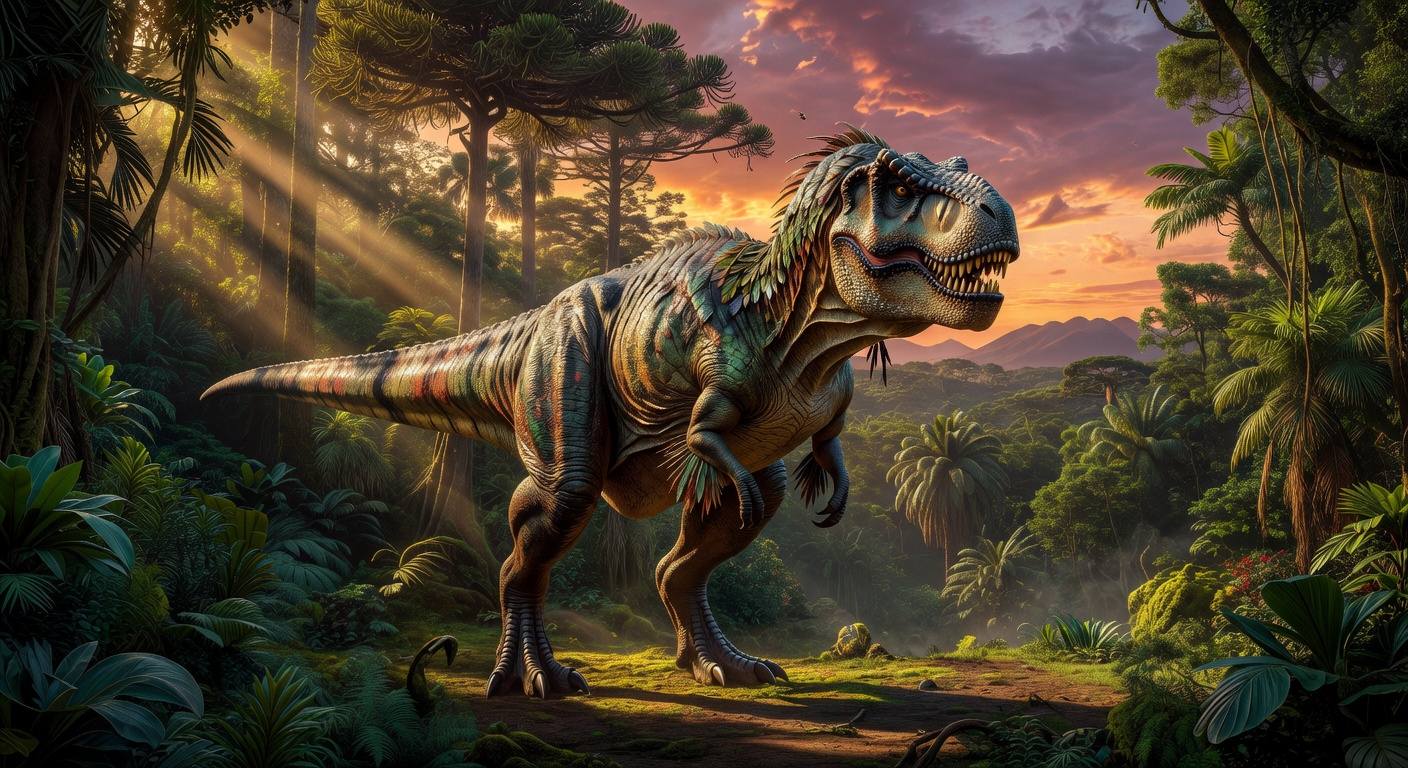
Recent research has revealed a far more sophisticated animal than the lumbering monster of old illustrations. T. rex possessed forward-facing eyes that gave it excellent depth perception, an enormous olfactory region in the brain indicating a superb sense of smell, and possibly simple feathers or bristle-like structures during its younger years. Its arms, though short, were extremely powerful and may have helped it hold struggling prey during the kill.
T. rex was both an active hunter and a scavenger. It could detect a dead Triceratops carcass from several miles away and was powerful enough to drive smaller predators from a kill.
- Its skull alone weighed roughly 500 kg — heavier than an adult horse.
- Grew at an astonishing rate: reached 2 tonnes by age 14 and full size before 20.
- Could crush a human femur with ease. Its teeth were thick, serrated, and constantly replaced.
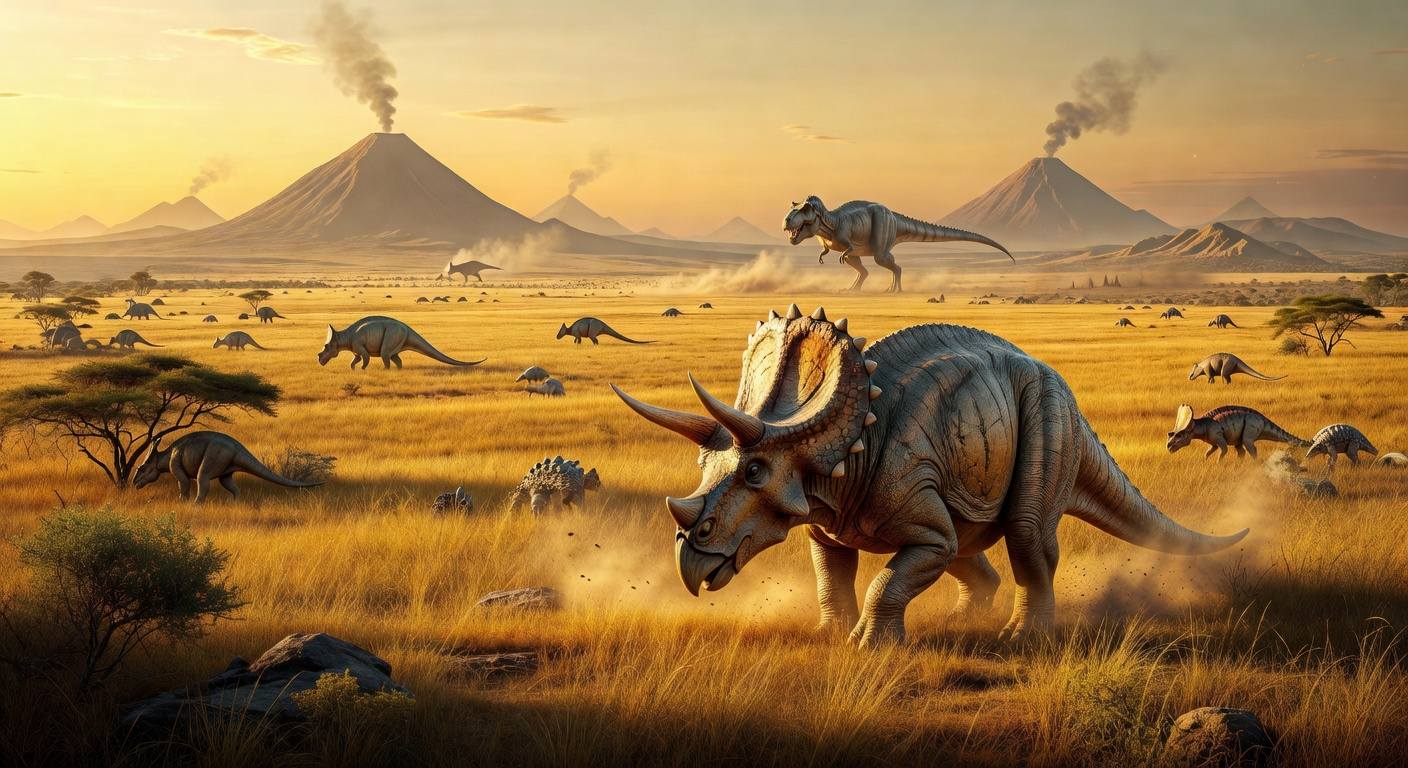
- Lived alongside Triceratops, Ankylosaurus, and Edmontosaurus in the Hell Creek ecosystem.
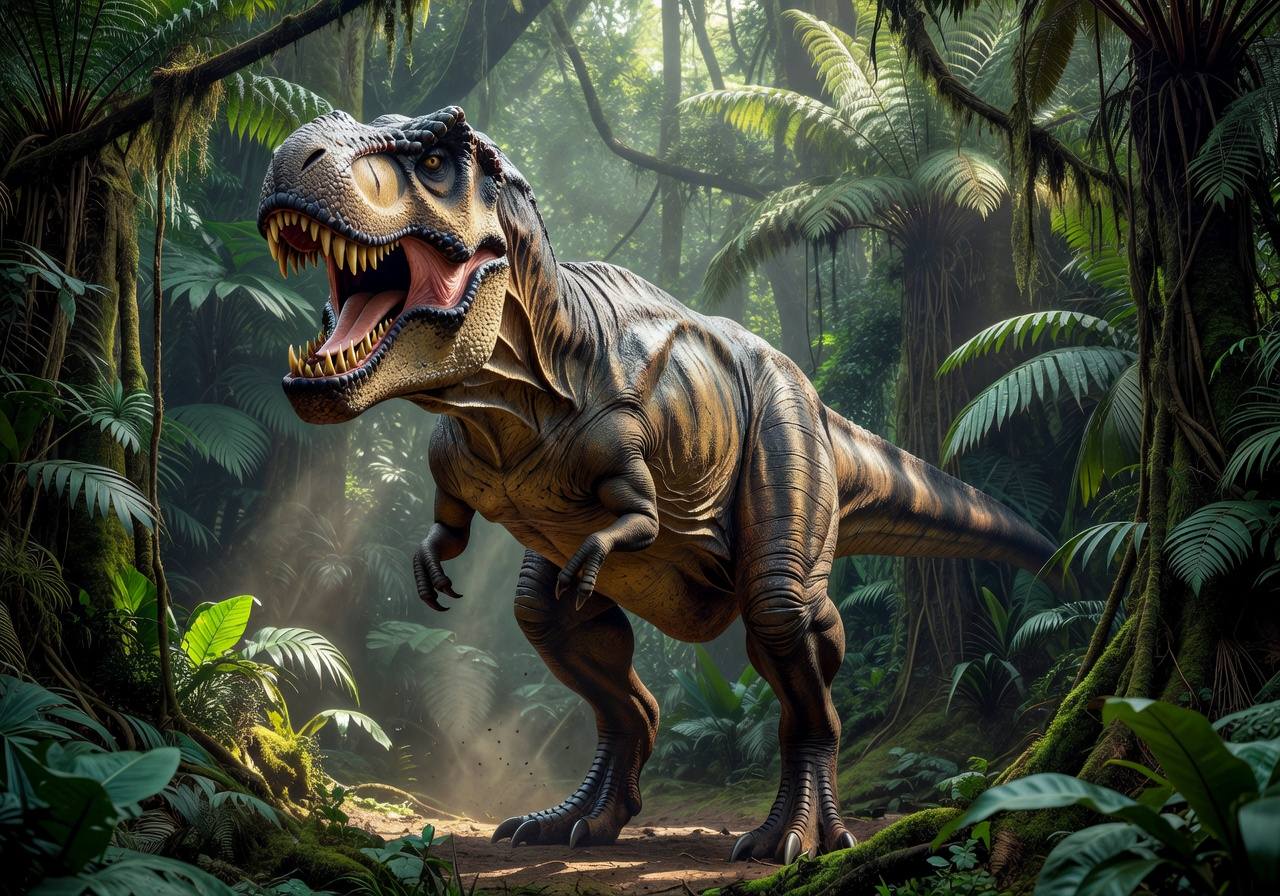
T. rex at dawn
A scientifically grounded reconstruction showing realistic gait, head movement, and scale in a misty Cretaceous forest.
Gallery
Habitat & Range
Tyrannosaurus rex lived in what is now the western United States and Canada, from Alberta to Texas. The environment was a mix of coastal floodplains, river valleys, and seasonal forests. The climate was warm and humid with distinct wet and dry seasons.