From sea to shore
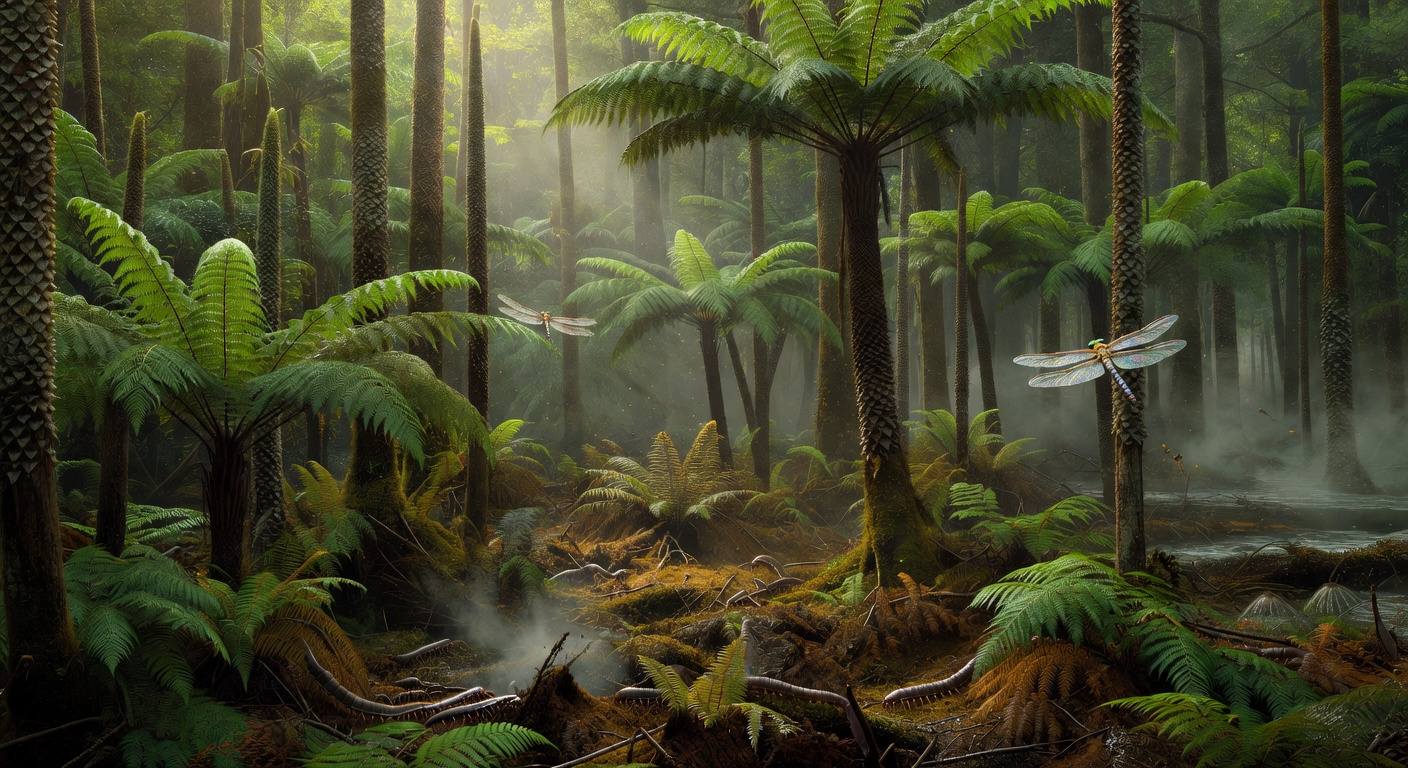
By the Devonian Period, the oceans had been full of life for hundreds of millions of years. The continents, however, were still mostly barren. That began to change as small plants evolved the ability to stand upright and pull water from the soil. Over time, these early plants formed the world’s first forests.
The First Land Vertebrates
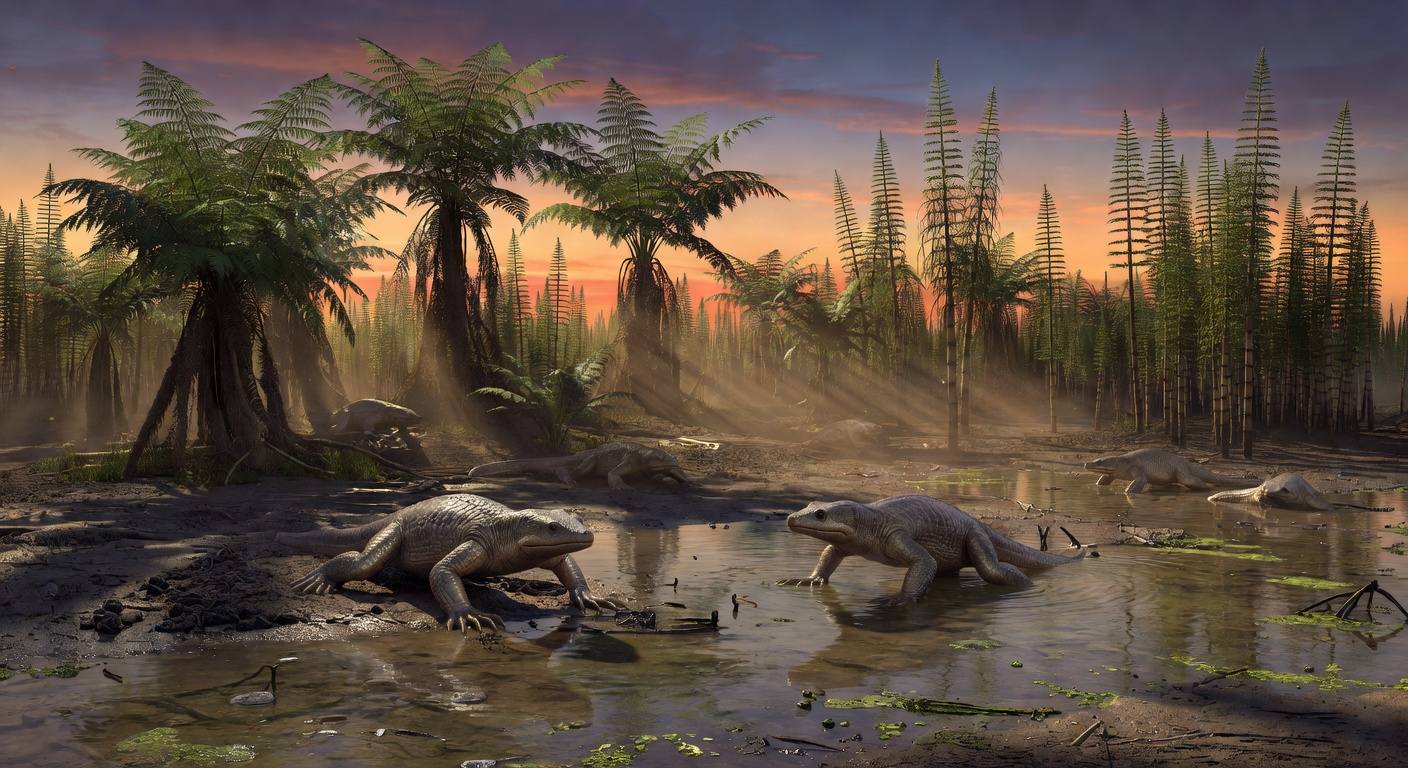
At the same time, certain fish developed stronger fins and lungs that allowed them to survive brief periods out of water. These lobe-finned fish eventually gave rise to the first tetrapods — animals with four limbs that could crawl onto land. The earliest ones were still very much tied to the water, but they represented the beginning of the great vertebrate conquest of the land.
The Devonian is often called the “Age of Fishes,” but it was also the period when life took its first serious steps onto dry ground.
The colonization of land during the Devonian was one of the biggest leaps in evolutionary history. It opened up vast new environments and eventually led to amphibians, reptiles, dinosaurs, birds, and mammals — including humans.
- The first land plants were small and moss-like before giant forests appeared later in the period.
- Early tetrapods still spent most of their lives in water and were not yet true land animals.
- Insects evolved wings for the first time during the Devonian.
- Some of the largest fish that ever lived swam in Devonian seas, including massive armored placoderms.
- The first forests dramatically changed the atmosphere by pulling carbon dioxide out of the air.
- By the end of the Devonian, life had a permanent presence on land.
Stepping onto land
A reconstruction of the Devonian landscape — the first forests, insects, and early tetrapods beginning to explore the land.
Gallery
Devonian Land Timeline
| Time | Development |
|---|---|
| ~419 million years ago | Early plants on land |
| ~400 million years ago | First forests |
| ~375 million years ago | First tetrapods |
| ~359 million years ago | Devonian ends |
Why the Devonian Matters
The Devonian colonization of land was one of the biggest leaps in evolutionary history. It opened up entirely new environments and set the stage for amphibians, reptiles, dinosaurs, birds, and mammals — including us. Once life left the water, the world would never be the same.