The end of an old world
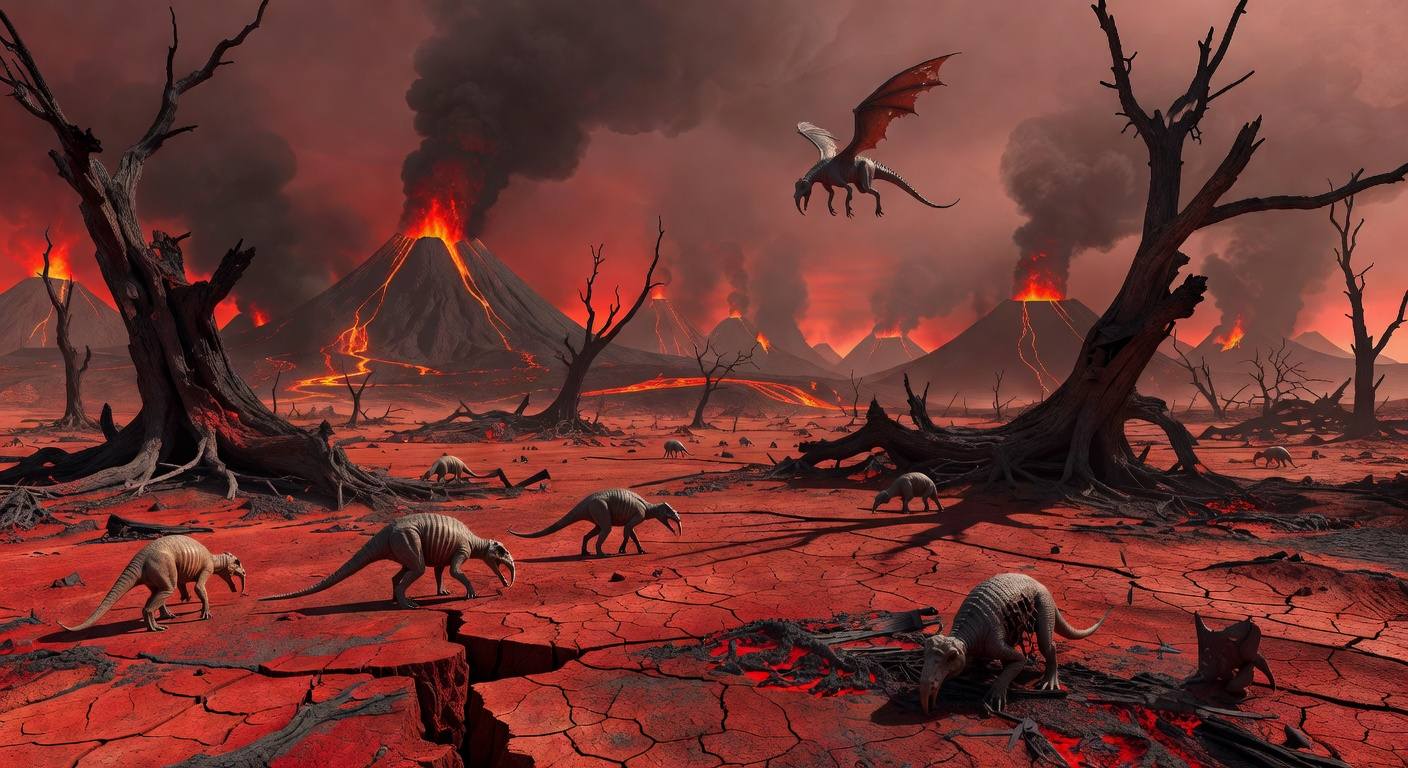
Around 252 million years ago, Earth suffered the most catastrophic mass extinction in its entire history. In a geologically short period, over 90% of marine species and roughly 70% of land vertebrate species disappeared. The primary cause appears to have been a series of colossal volcanic eruptions in what is now Siberia, known as the Siberian Traps. These eruptions released enormous amounts of carbon dioxide, methane, and toxic gases, triggering extreme global warming, ocean acidification, and the collapse of food webs worldwide.
A Planet Pushed to the Brink
This event, often called the Great Dying, came terrifyingly close to ending complex life on Earth. The oceans became largely anoxic, acid rain fell across the continents, and temperatures soared. Life was pushed to the absolute edge of survival.
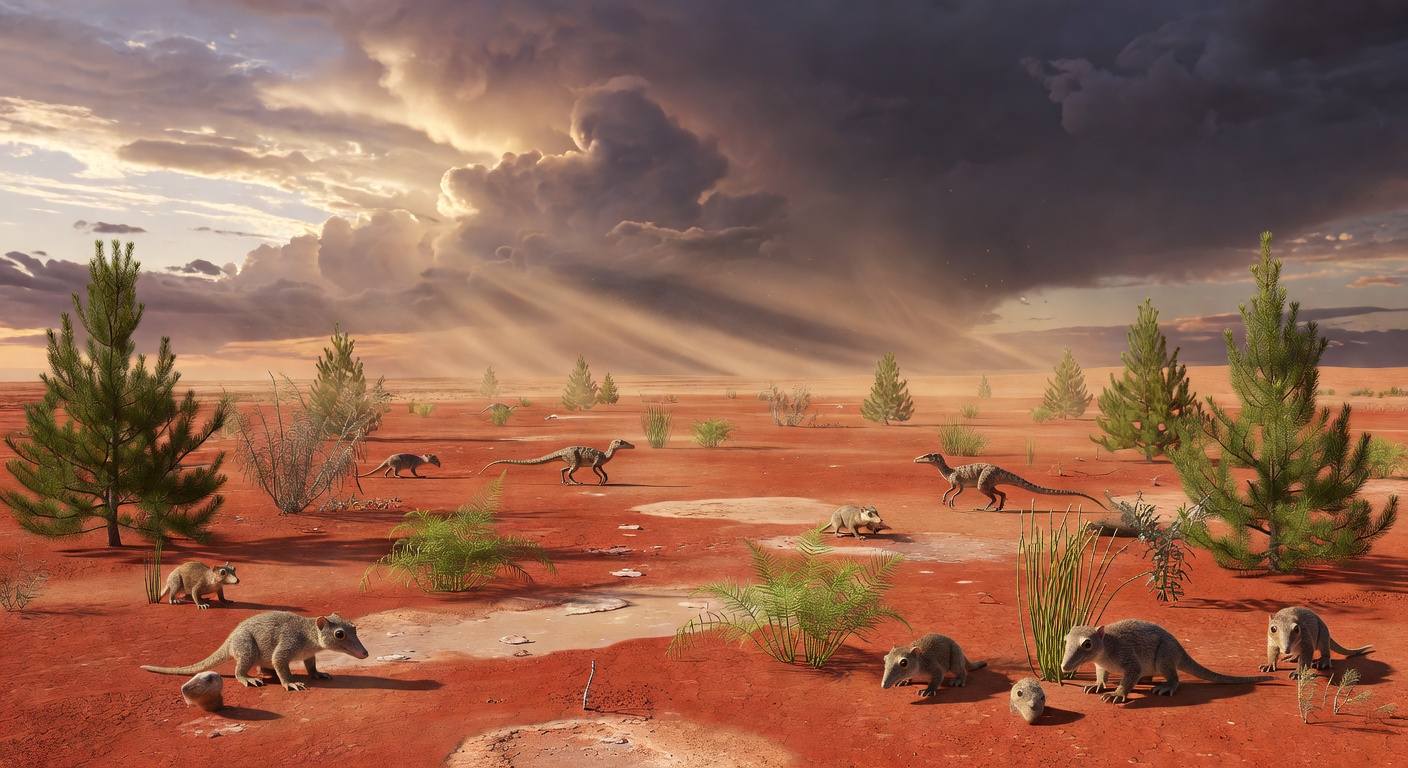
Yet a few lineages made it through. Their descendants would go on to repopulate the planet during the Triassic, eventually giving rise to dinosaurs, mammals, and us.
The End-Permian extinction was the closest life has ever come to being completely wiped out. It serves as a stark reminder of how fragile the biosphere can be when pushed too far — and how resilient the survivors can be when given even the smallest chance to recover.
- Up to 96% of all marine species may have gone extinct.
- The recovery from this extinction took longer than from any other mass extinction.
- The Siberian Traps eruptions released enough lava to cover the entire United States in a layer over 1 km thick.
- Global temperatures may have risen by as much as 10°C during the crisis.
- It took 5–10 million years for ecosystems to regain anything like their previous complexity.
- Without the few lucky survivors, complex life as we know it might never have returned.
The Great Dying
A reconstruction of the devastated landscapes and collapsing ecosystems during the End-Permian mass extinction — the closest life has ever come to being completely wiped out.
Gallery
End-Permian Extinction Timeline
| Time | Event |
|---|---|
| ~252 million years ago | Siberian Traps erupt |
| ~252 million years ago | Peak extinction |
| ~250 million years ago | Recovery begins |
| ~240 million years ago | Ecosystems stabilize |
Why the Great Dying Matters
This extinction came closer than any other to ending complex life on Earth. It serves as a stark reminder of how fragile the biosphere can be when pushed too far — and how resilient the survivors can be when given even the smallest chance. Without the few lucky lineages that made it through, the world would look very different today.