The great green world
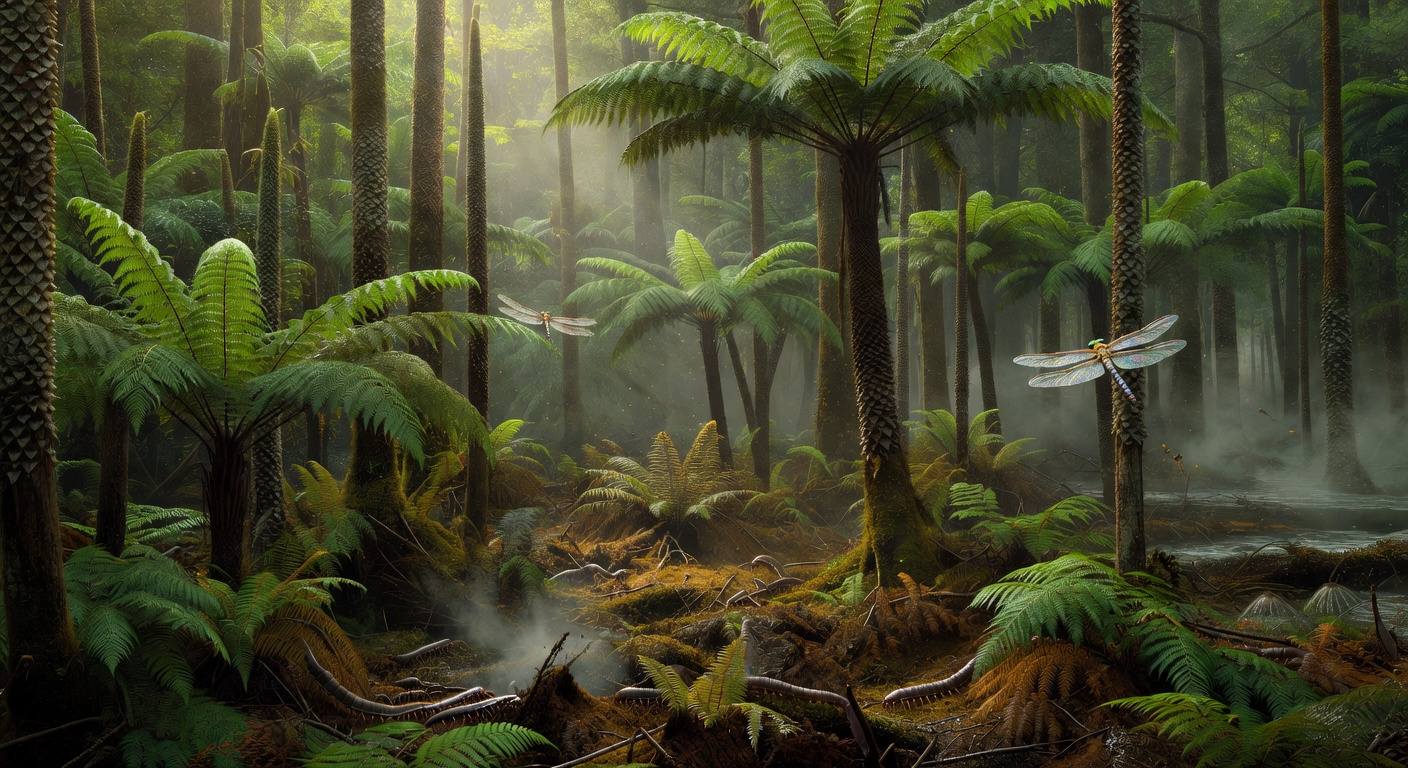
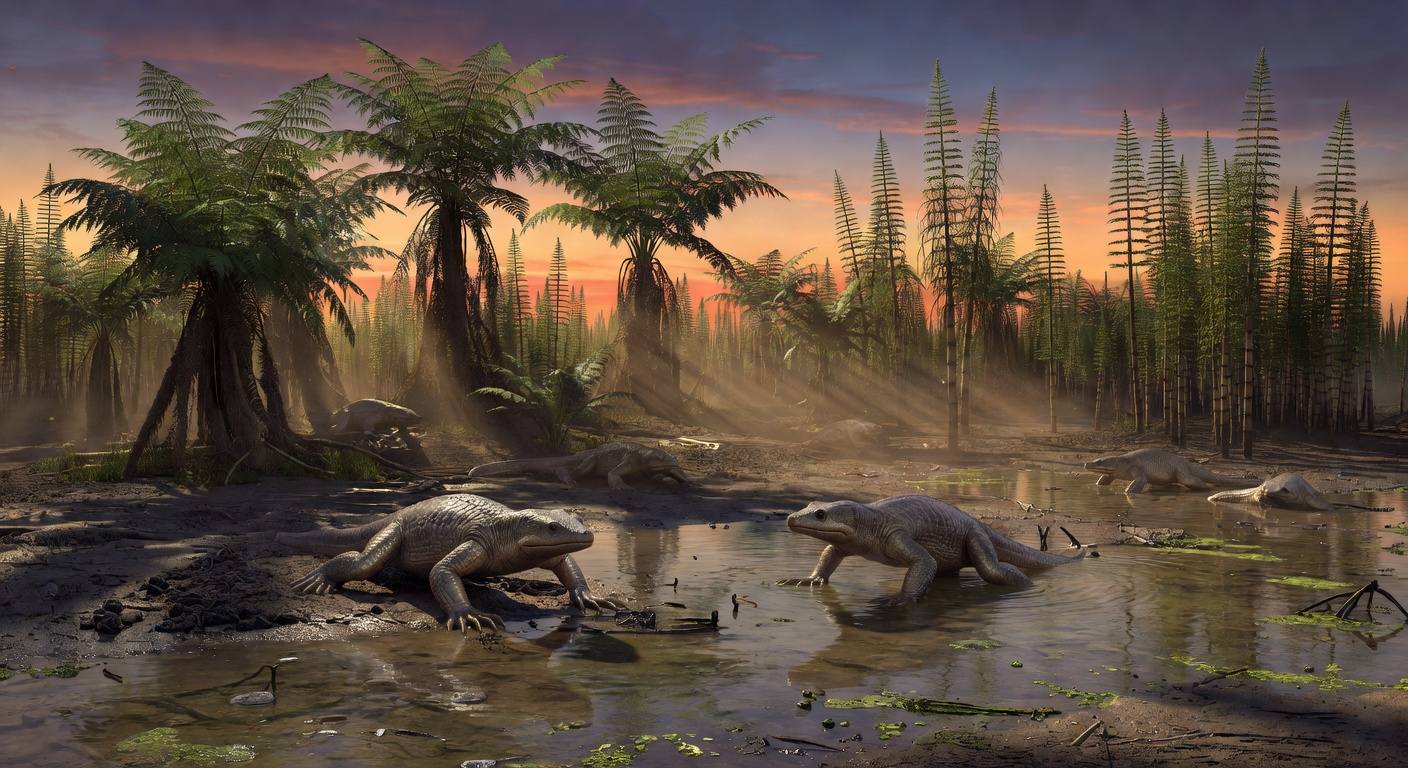
During the Carboniferous Period, the land was covered in dense, swampy forests of giant plants. These tropical jungles grew in warm, wet conditions and produced enormous amounts of biomass. When the plants died in the oxygen-poor swamps, they didn’t fully rot — instead, they piled up and were slowly compressed into the thick coal seams that would later power the Industrial Revolution.
Insects the Size of Birds
The atmosphere during the Carboniferous contained significantly more oxygen than today’s air (possibly up to 35%). This allowed insects to grow to gigantic sizes because they breathe through a network of tubes that becomes inefficient at larger scales. Dragonflies with wingspans of 70 cm or more patrolled the forests, while millipedes grew over 2 meters long.
On land, amphibians were still the dominant large vertebrates, but the first true reptiles were evolving — small, lizard-like animals that could lay eggs on dry land, freeing them from dependence on water.
The Carboniferous forests didn’t just create new habitats — they literally created the coal that would later power human civilization. In a very real sense, the energy we use today comes from plants that lived over 300 million years ago.
- Some Carboniferous dragonflies had wingspans larger than a seagull’s.
- Most of the coal we burn today comes from plants that lived during this period.
- Giant millipedes over 2 meters long crawled through the undergrowth.
- The oxygen level may have reached 35% — much higher than today’s 21%.
- The first true reptiles evolved during the Carboniferous, laying eggs on land.
- These forests were so productive that they changed the global carbon cycle for millions of years.
The coal swamps
A reconstruction of the vast, swampy Carboniferous forests that would later become the coal we burn today.
Gallery
Carboniferous Timeline
| Time | Development |
|---|---|
| ~359 million years ago | Carboniferous begins |
| ~340 million years ago | Giant insects appear |
| ~310 million years ago | First reptiles |
| ~299 million years ago | Carboniferous ends |
Why the Carboniferous Matters
The Carboniferous forests didn’t just create new habitats — they literally created the coal that would later power human civilization. In a very real sense, the energy we use today comes from plants that lived over 300 million years ago. The period also set the stage for the rise of reptiles and the eventual dominance of land by amniotes.