A living planet, not a machine
In the 1960s, while working with NASA on the search for life on Mars, scientist James Lovelock realized something remarkable about Earth. Our planet’s atmosphere is in a state of chemical disequilibrium — full of reactive gases like oxygen and methane that should not coexist in such quantities without constant replenishment. He proposed that life itself must be actively maintaining these conditions. He called this idea the Gaia Hypothesis, after the Greek goddess of the Earth.
A Self-Regulating System
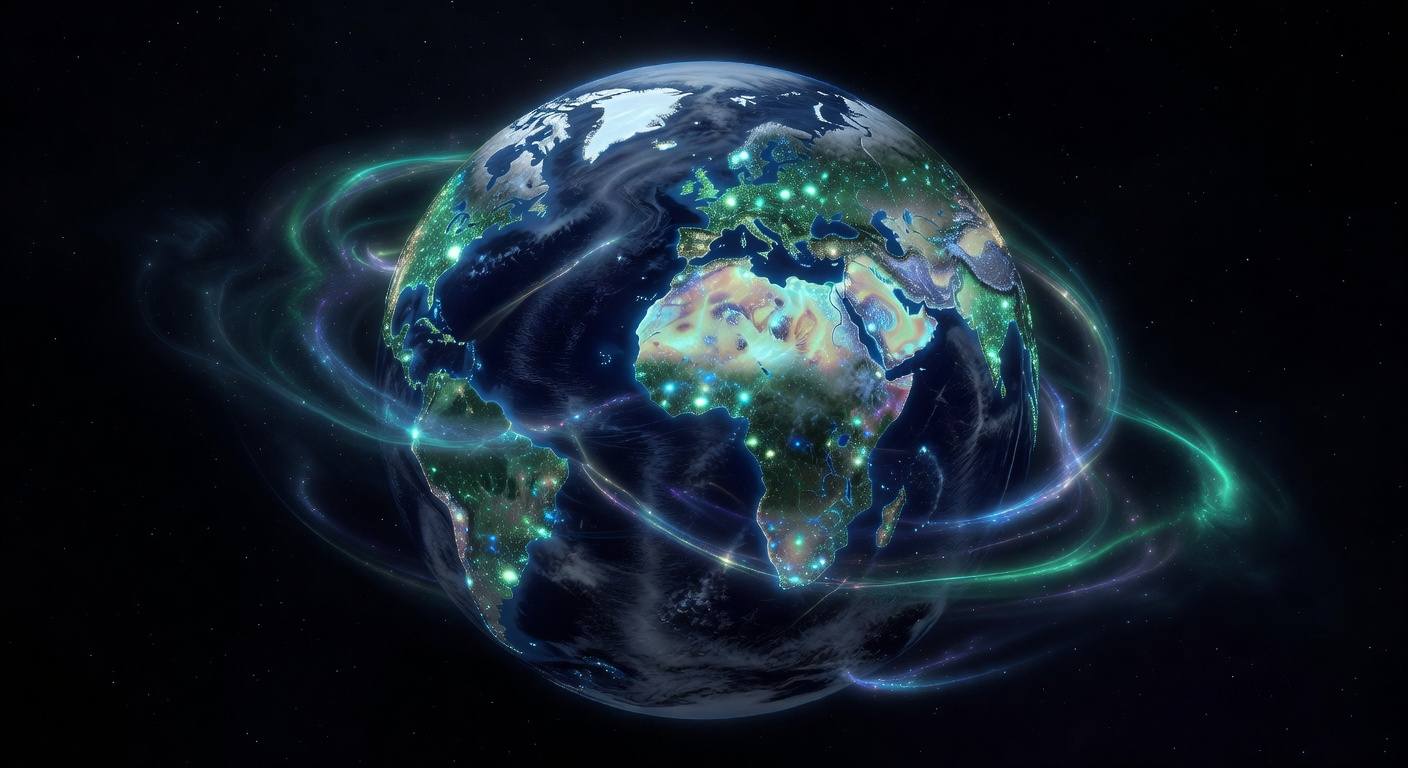
The core idea is that life and the physical environment have co-evolved as a single, self-regulating system. Conditions that make life possible — global temperature, atmospheric composition, ocean chemistry — are not simply luck. They are actively maintained within habitable ranges by the activity of living organisms working together with geological processes.
While the strongest versions of Gaia remain controversial, the underlying insight — that life is a powerful geological force that shapes the planet — is now widely accepted in Earth System Science.
Life did not simply adapt to Earth. Life and Earth together created and maintain the conditions that allow complex life to exist. We are not passengers on this planet — we are part of the system that keeps it habitable.
- The oxygen we breathe was almost entirely produced by ancient microbes over billions of years.
- Without life, Earth’s temperature would be roughly 30°C hotter or colder — uninhabitable for us.
- The hypothesis helped shift science from viewing Earth as separate systems to one integrated Earth System.
- Lovelock originally developed the idea while working for NASA on detecting life on Mars.
- The simple Daisyworld computer model was created to show how life could regulate temperature without any planning or consciousness.
- Many of Gaia’s core ideas are now accepted as part of mainstream Earth System Science.
Earth as a living system
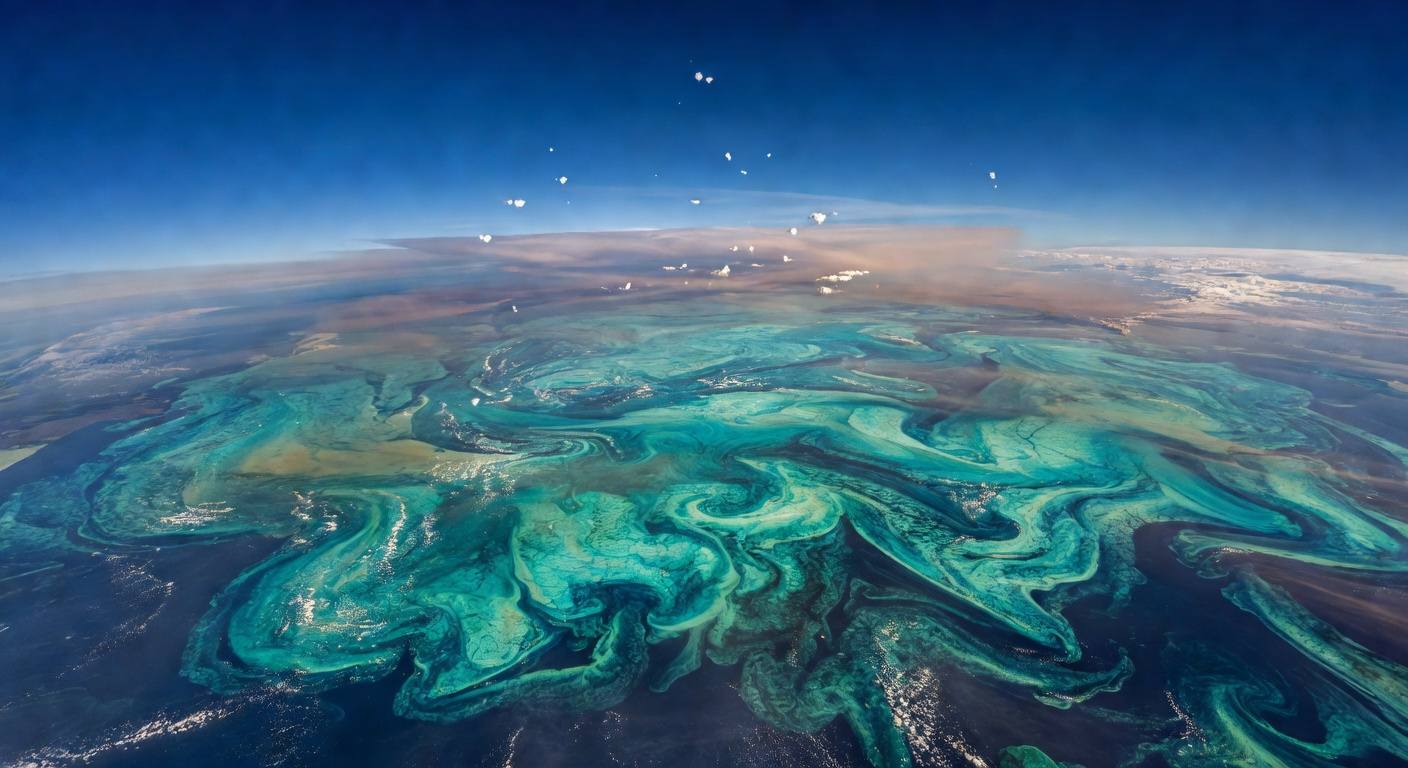
The Gaia hypothesis suggests that Earth behaves like a self-regulating living system. Its atmosphere, oceans, soil, and life forms interact to maintain conditions suitable for life, not by conscious design, but through complex natural feedback loops.
Gallery
Gaia Through Time
| Time | Key Development |
|---|---|
| ~3.5 billion years ago | First life |
| ~2.4 billion years ago | Great Oxidation Event |
| ~500 million years ago | Land colonization |
| Today | Anthropocene |
Why Gaia Still Matters
Whether or not Earth is literally “alive,” the Gaia Hypothesis helped shift our perspective from seeing the planet as a passive backdrop for life to recognizing it as a complex, dynamic system in which life itself is a major geological force. This understanding is now central to how we think about climate change and planetary boundaries.