Our place among the stars
The Milky Way did not form in isolation. It grew through the repeated merging of smaller protogalaxies in the early universe. Over billions of years, these mergers, combined with the steady collapse of gas into a rotating disk, created the majestic spiral galaxy we live in today.
A Violent Youth
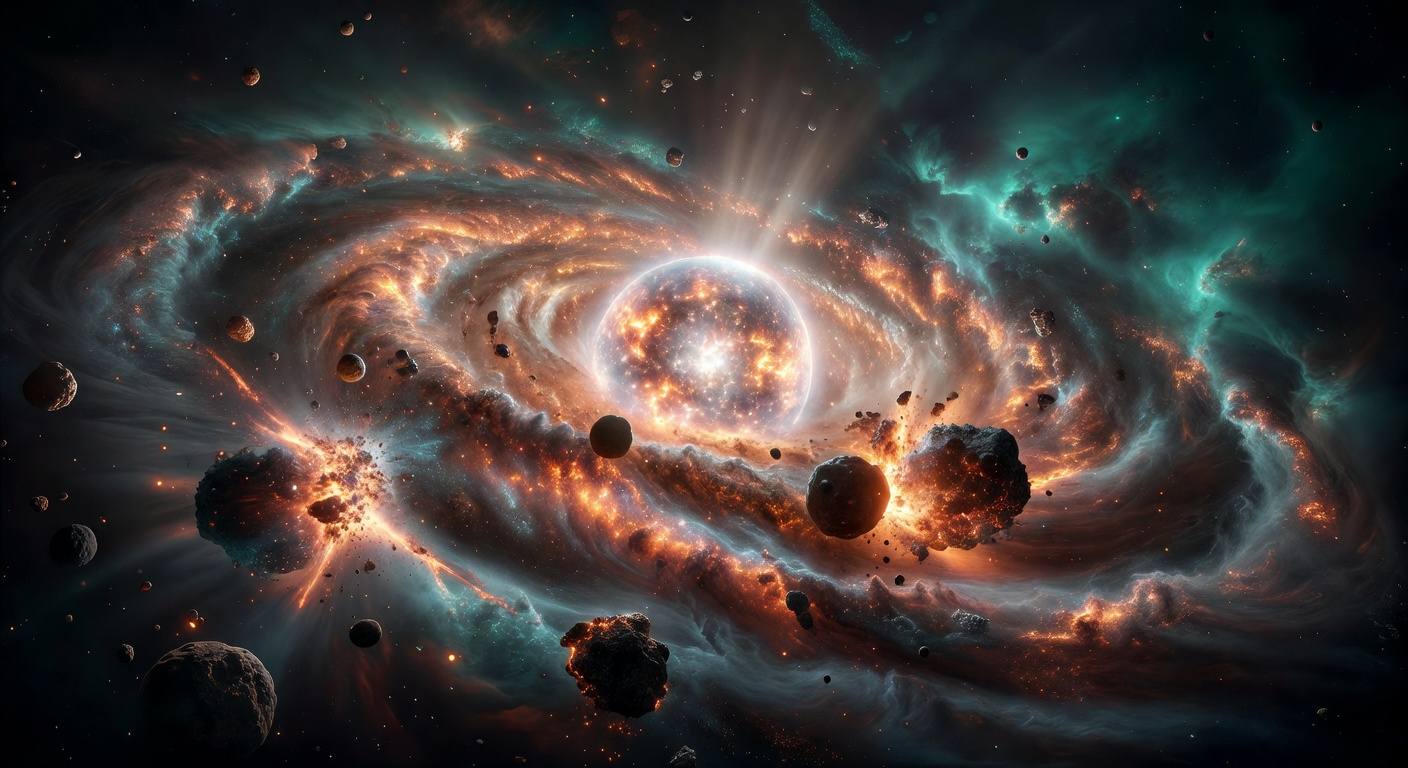
Early in its life, the Milky Way was much more chaotic. It swallowed dozens of smaller galaxies. The remnants of some of those ancient mergers can still be seen today as streams of stars in the galactic halo. Our galaxy's central bulge and thick disk are direct evidence of this violent past.
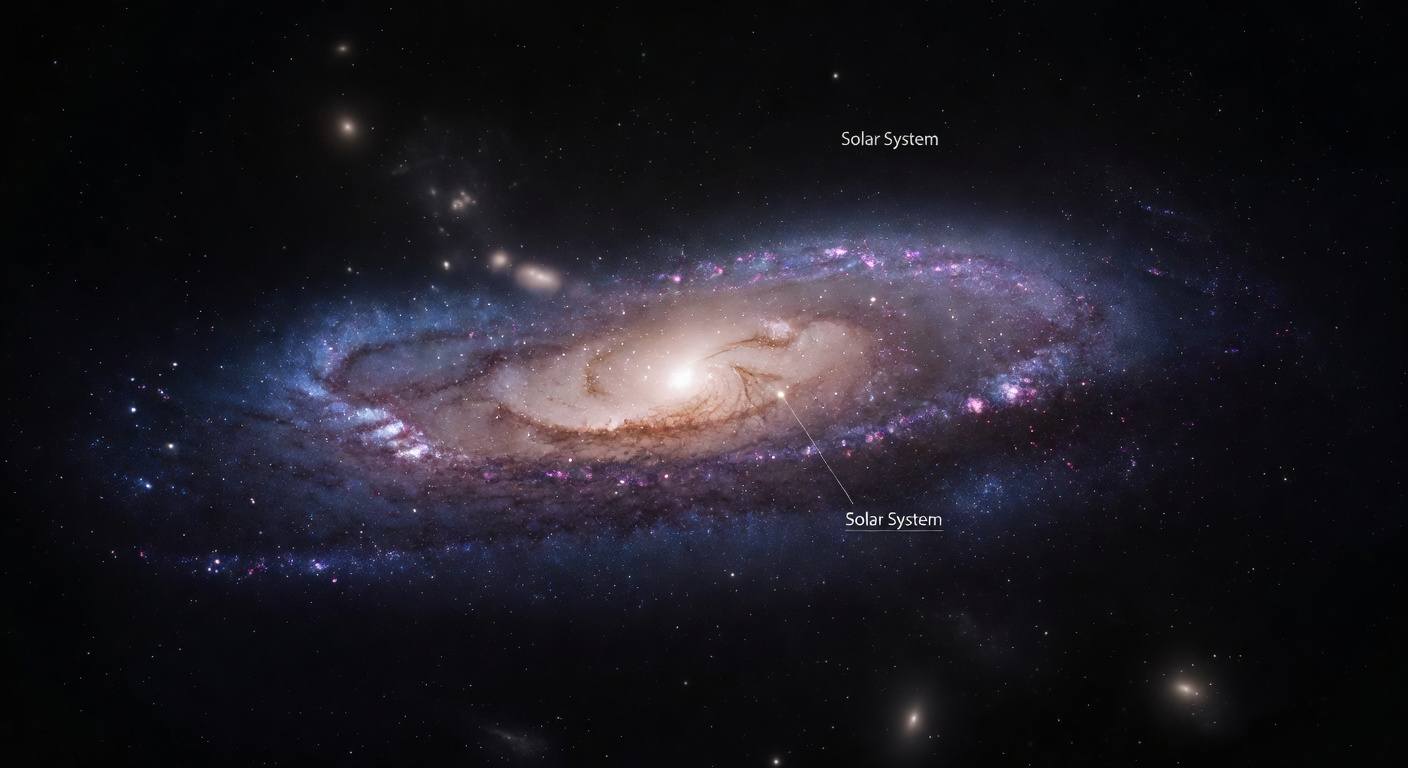
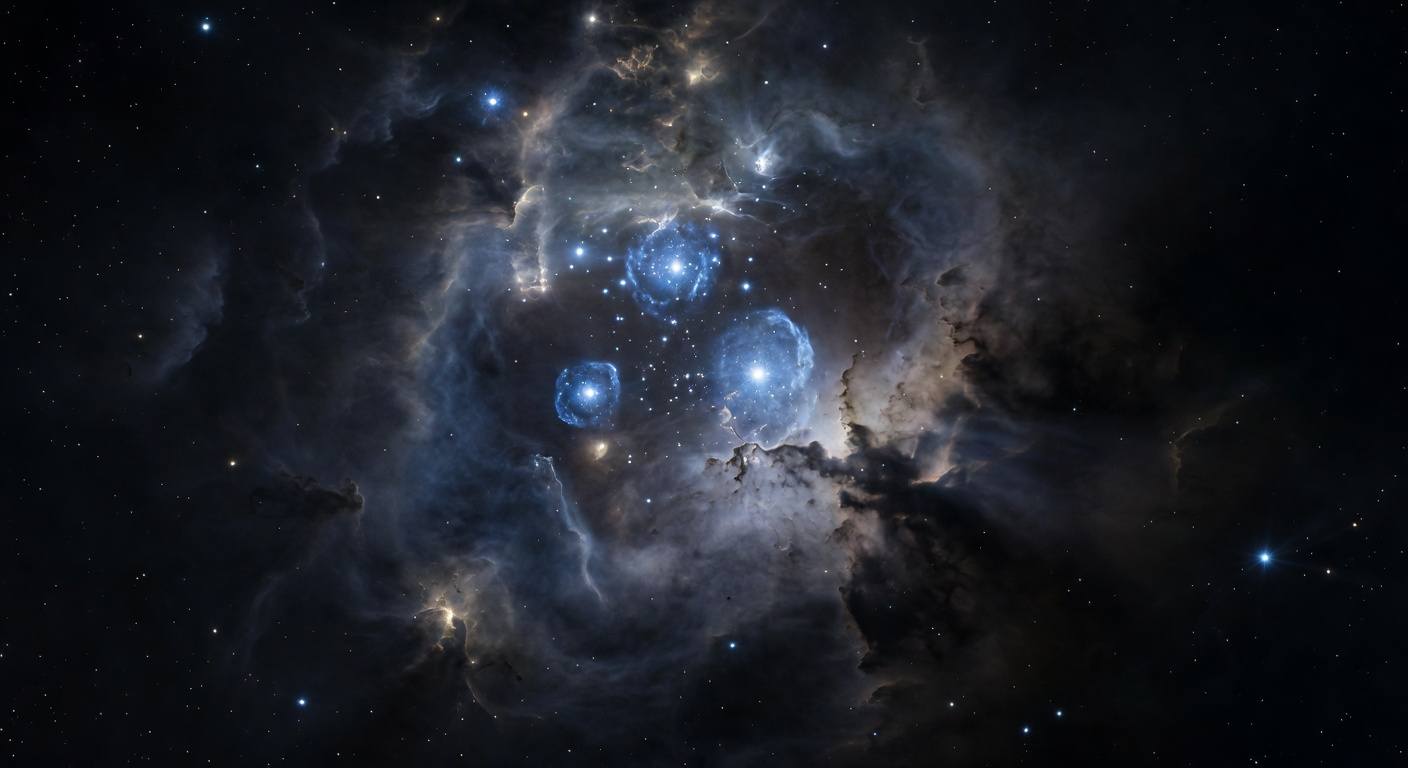
Around 4.6 billion years ago, in one of the galaxy's quieter spiral arms (the Orion Arm), a cloud of gas and dust collapsed to form our Sun and the Solar System. We are relative newcomers in a very old galaxy.
The Sun is not the center of the Milky Way — it orbits the galactic center at about 828,000 km/h, completing one full lap every 225–250 million years. We are currently on our 20th or 21st orbit since the Sun was born.
- The Milky Way contains an estimated 200–400 billion stars and is about 100,000 light-years across.
- It is on a collision course with the Andromeda Galaxy in roughly 4.5 billion years.
- The Solar System completes one orbit around the galactic center every 225–250 million years (a galactic year).
- The Milky Way has a supermassive black hole at its center (Sagittarius A*) with 4 million solar masses.
- Most of the Milky Way’s mass is dark matter, which we cannot see but whose gravity shapes the galaxy.
- The Sun is a third-generation star — it formed from material enriched by many previous generations of stars.
Our galactic home
The chaotic birth of our home galaxy — the Milky Way — through ancient mergers and gravitational collapse in the early universe.
Gallery
Why Our Galaxy Matters
The Milky Way is not just our address in the universe. It's the environment that made everything possible. The Sun formed in a relatively quiet corner of a mature galaxy, protected enough for planets to form and life to eventually take hold. Without the long, turbulent history of our galaxy, we wouldn't be here to wonder about it.
Continue the Journey
Milky Way Through Time
| Time | Stage |
|---|---|
| ~13.6 billion years ago | First protogalaxies |
| ~10–12 billion years ago | Major mergers |
| ~4.6 billion years ago | Sun forms |
| Today | Mature spiral galaxy |