The universe wakes up
For roughly 200 million years after the Big Bang, the universe was a cold, dark place filled only with hydrogen and helium gas. No stars shone. Then gravity began pulling this gas into dense clouds. Inside the densest regions, the first stars — known as Population III stars — were born.
Monsters of the Early Universe
These first stars were unlike anything that exists today. They were enormous — often 100 to 1,000 times the mass of our Sun — and burned at extreme temperatures. Because they contained no heavy elements, they burned their fuel incredibly fast and lived only a few million years before exploding as powerful supernovae.
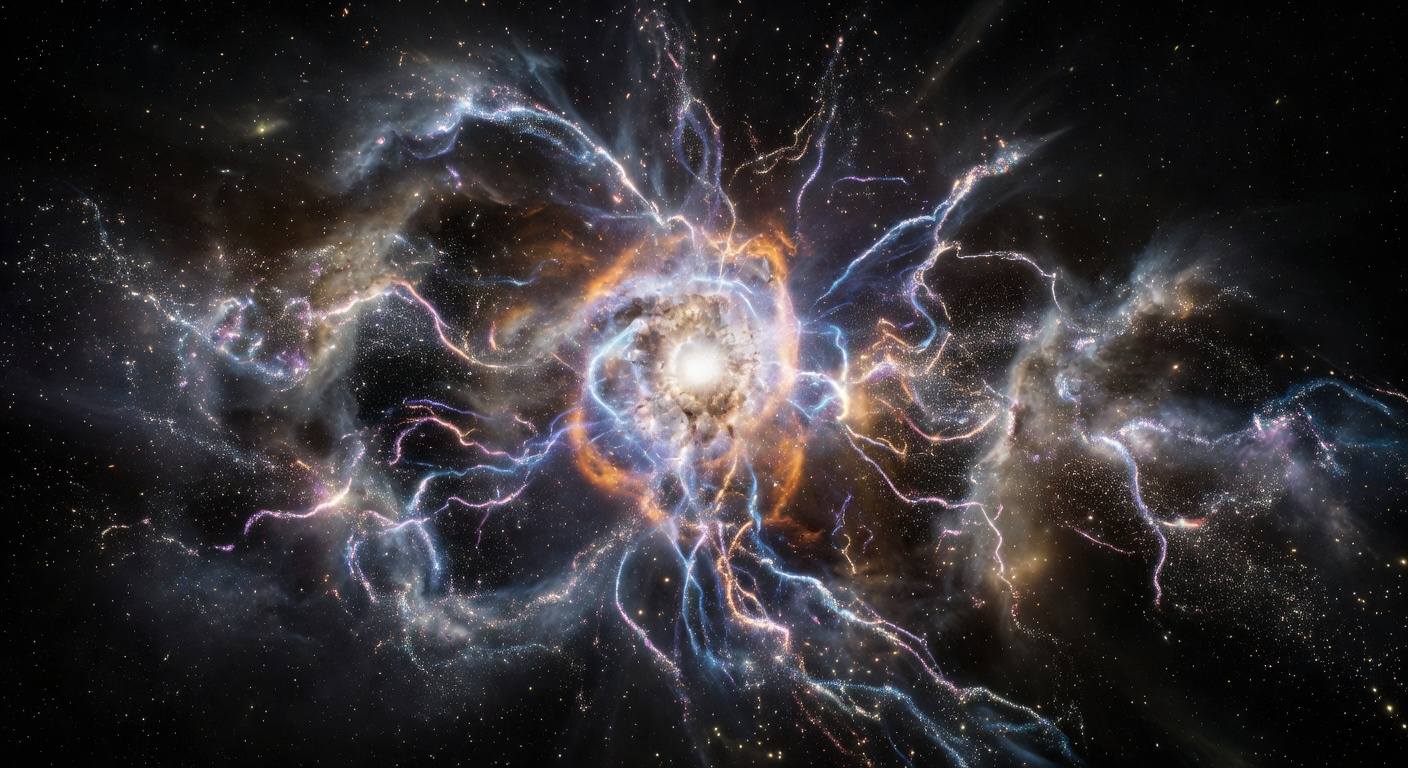
Their deaths were cataclysmic. These supernovae scattered the first heavy elements (carbon, oxygen, silicon, iron) into the surrounding gas, seeding the raw materials that would one day form planets and life.
Every atom of carbon in your body, every oxygen molecule you breathe, and the iron in your blood was first forged inside stars that lived and died billions of years ago — stars that could only exist because of the first generation that came before them.
- Population III stars were 100–1000 times more massive than the Sun and lived only 2–5 million years.
- Their intense ultraviolet light began reionizing the universe, ending the cosmic Dark Ages.
- These stars contained virtually no heavy elements — they were made almost purely of hydrogen and helium.
- Their supernovae were among the most energetic explosions in cosmic history and created the first black holes.
- The James Webb Space Telescope is currently hunting for direct evidence of these elusive first stars.
- Without Population III stars, there would be no carbon, no oxygen, and no rocky planets capable of supporting life.
The cosmic dawn
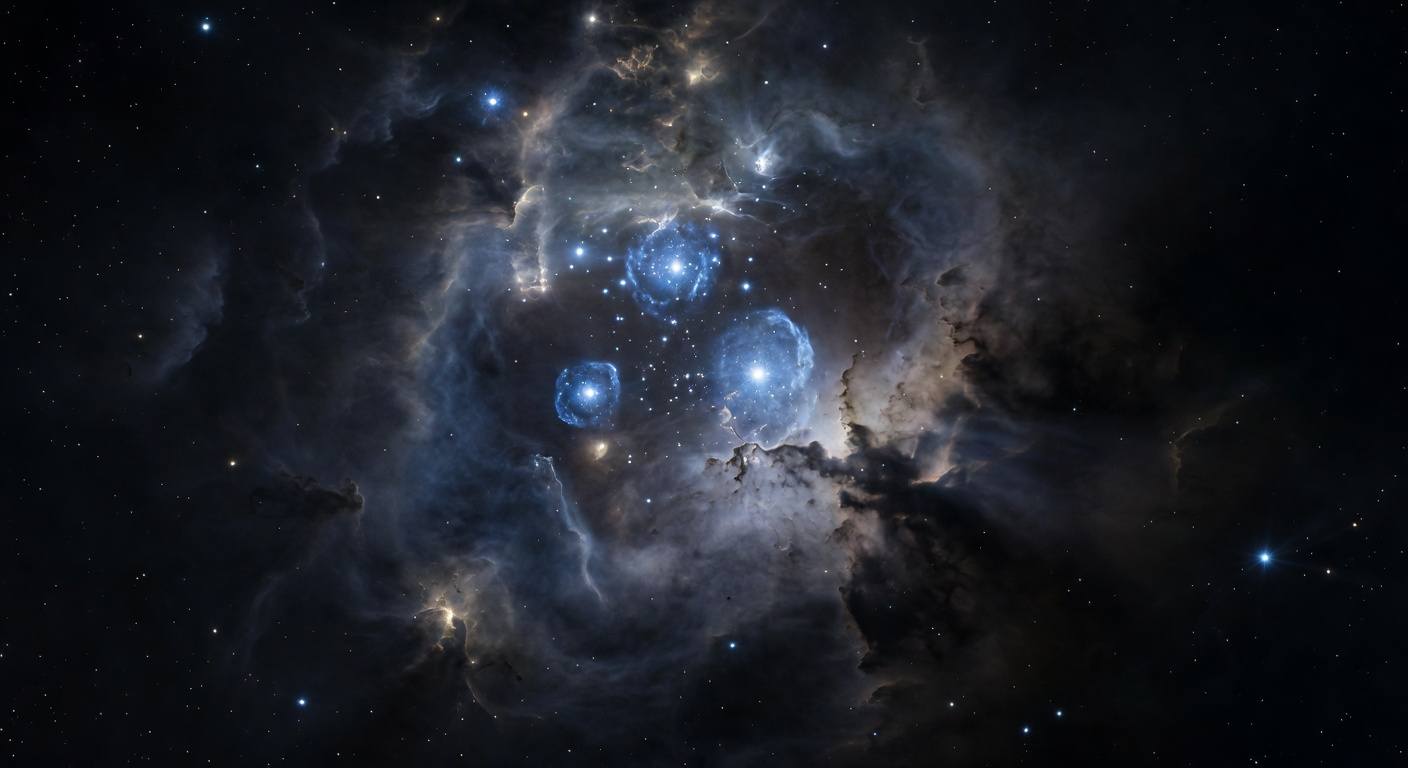
A reconstruction of the ignition of the first Population III stars — massive, metal-free giants whose light and deaths transformed the universe forever.
Gallery
Key Events in Cosmic Dawn
| Time | Event |
|---|---|
| ~200–400 Myr | First stars ignite |
| ~300–600 Myr | First supernovae |
| ~500 Myr – 1 Gyr | Reionization begins |
| ~1 billion years | First galaxies form |
Why the First Stars Matter
Without the first stars, the universe would still be made of only hydrogen and helium. There would be no carbon for organic molecules, no oxygen for water, and no rocky planets. These short-lived giants are the reason complex chemistry — and eventually life — became possible anywhere in the cosmos.