A planet of mammals
After the asteroid cleared the stage, mammals did something that still astonishes paleontologists. In a relatively short span of geological time they produced more variety in body size, shape, and lifestyle than almost any other group of vertebrates has ever achieved. Some returned to the sea and became whales larger than any dinosaur. Others took to the air as bats. A few grew into ground sloths the size of small houses.
The great experiment
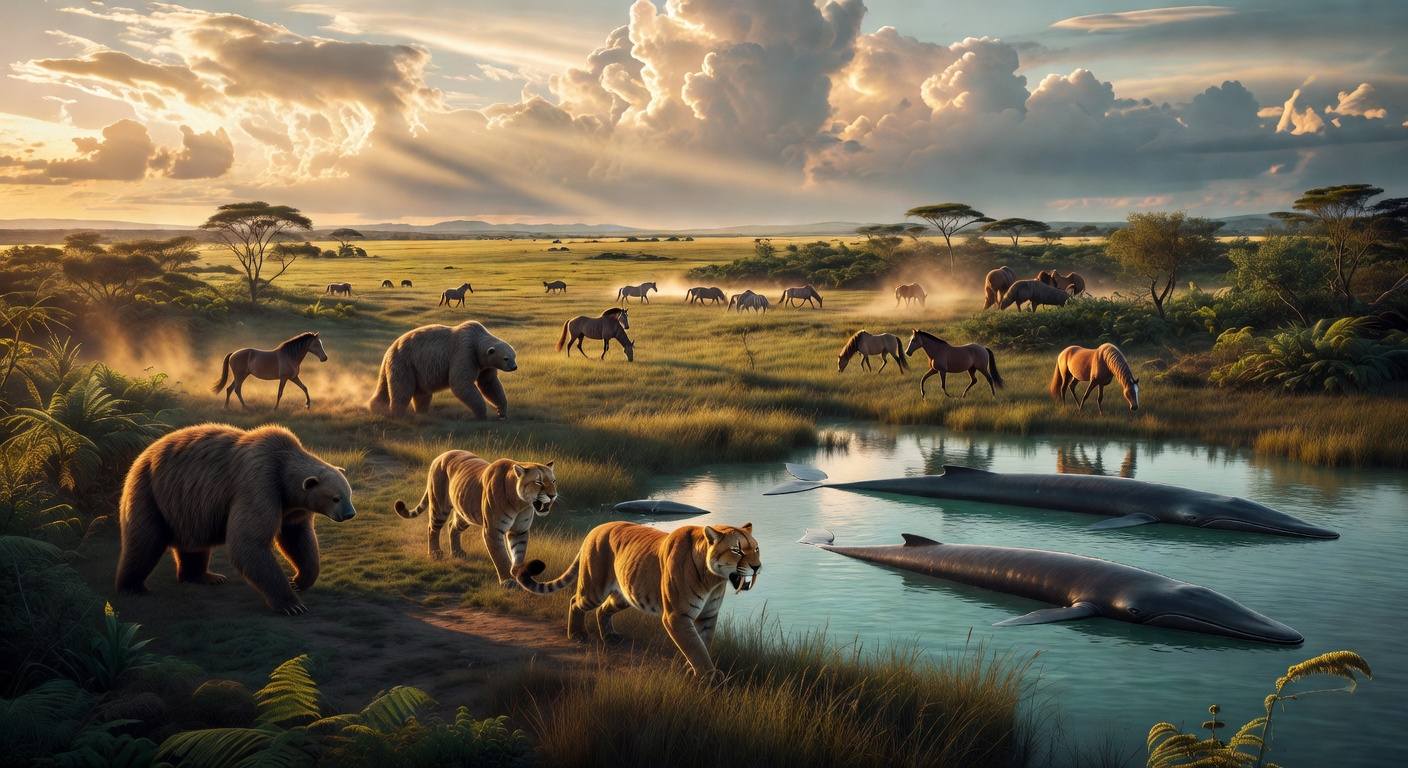
This long chapter is sometimes called the Age of Mammals, though the name understates how strange and experimental it really was. Early on, the world was still warm and forested. Mammals grew large quickly. Later, as climates cooled and grasslands spread, entirely new body plans appeared — long-legged runners, high-crowned grazers, and predators with ever more specialized teeth and claws.
By the end of this period, the basic shape of the modern mammal world had been set. The groups we know today — rodents, carnivores, primates, hoofed animals, whales — had all established themselves. What remained was refinement and, eventually, the arrival of a single species with an unusual brain.
The Age of Mammals was not a steady march toward humans. It was a wild, branching exploration of what warm-blooded, milk-producing, large-brained animals could become. Most of those experiments are now extinct. We are only one surviving twig.
- The blue whale is the largest animal that has ever lived — bigger than any dinosaur that walked the Earth.
- Whales evolved from small, deer-like land animals that gradually returned to the sea over millions of years.
- Some of the first giant mammals after the dinosaurs were actually relatives of modern elephants and sea cows.
- Bats evolved true powered flight independently of birds and the long-extinct pterosaurs.
- The largest land predator of the entire Cenozoic was a giant carnivorous hoofed mammal, not a cat or wolf.
- Grasses spread dramatically during this time, creating the open plains that shaped many of today’s fastest mammals.
A world of giants and specialists
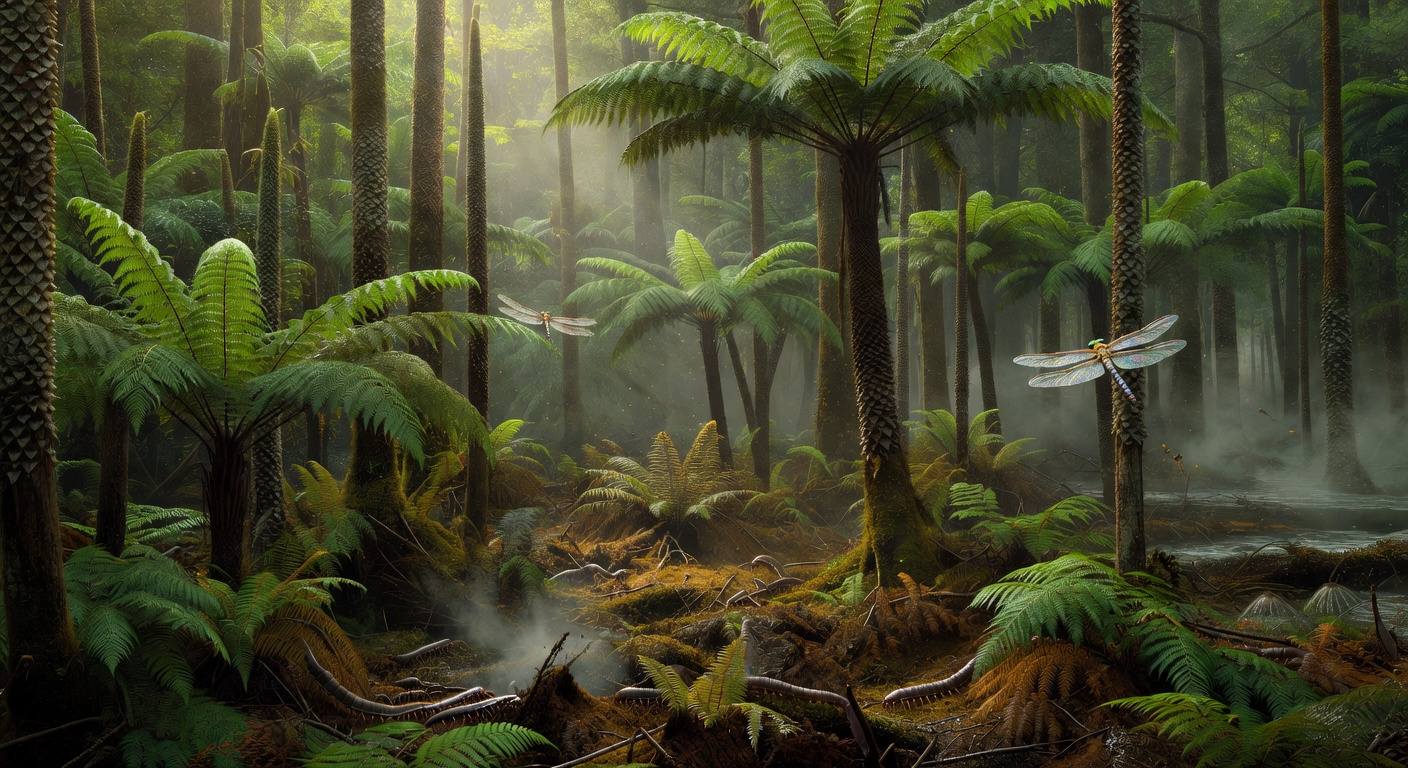
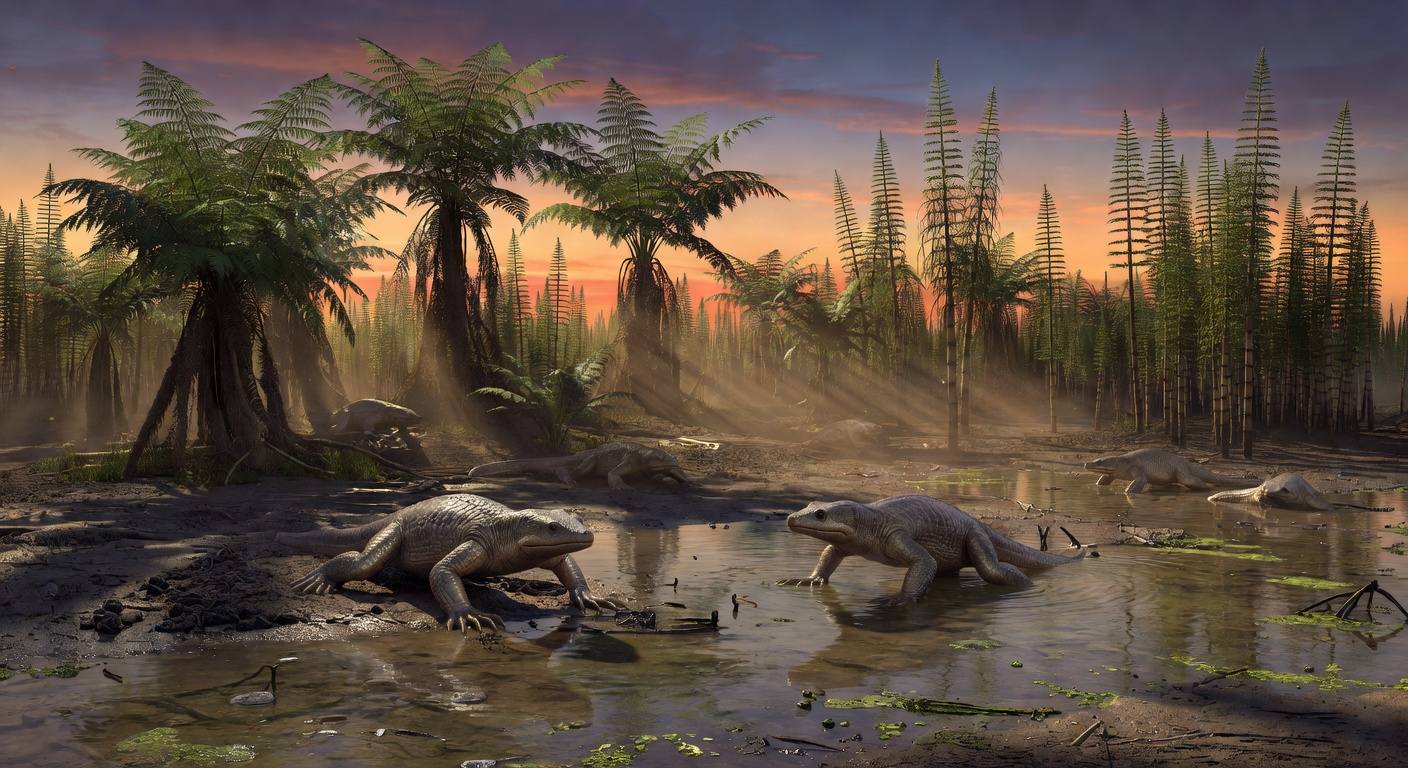
A reconstruction of the diverse landscapes of the Cenozoic, from warm Eocene forests to the spreading grasslands that supported vast herds of new mammals.
Gallery
Timeline of the Mammalian Explosion
| Period | Key Developments |
|---|---|
| 66–34 mya (Eocene) | First giants & early whales |
| 34–23 mya (Oligocene) | Cooling & new grazers |
| 23–5 mya (Miocene) | Peak diversity & grasslands |
| 5–2 mya (Pliocene) | Ice age forerunners |
Why this age matters
In roughly 60 million years, mammals produced more extreme body plans and ecological roles than reptiles had managed in 165 million. This was not refinement — it was an explosion of creativity in warm-blooded design.
Among the countless experiments, one quiet lineage of tree-dwelling mammals began developing forward-facing eyes, grasping hands, and larger brains. That lineage would eventually produce the only species that can tell this entire story.
Mammals did not simply inherit the planet. They helped transform it — spreading grasslands, moving nutrients across continents, and altering the atmosphere in ways that still shape our climate today.
The branch that would one day look back.
While thousands of mammal lines rose and fell, one small group of primates stayed in the trees, developed unusual hands and eyes, and slowly began the long path toward a completely new kind of intelligence.
Sources & Further Reading
Frequently Asked Questions
Did mammals really get bigger right after the dinosaurs died?↓
Yes. Within just a few million years, some mammals had already reached the size of modern bears and rhinos. The absence of large competitors and predators allowed rapid size increase in multiple lineages at once.
How did land animals become whales?↓
A group of hoofed mammals living near ancient shores gradually spent more time in the water. Over millions of years their limbs became flippers, their nostrils moved to the top of the head, and they developed the ability to give birth at sea.
Were there really giant predatory mammals?↓
Yes. For a time, the top predators on several continents were not cats or dogs but massive carnivorous relatives of modern hoofed animals. Later, true carnivores took over those roles.
Why did so many strange mammal groups eventually go extinct?↓
Climate change, competition with more efficient newcomers, and the spread of grasslands all played roles. Most of the wild experiments of the early Age of Mammals did not survive into the modern world.