Not so different after all
For most of the last century, Neanderthals were portrayed as primitive brutes. The reality revealed by genetics and careful archaeology is far more interesting. Neanderthals had brains as large as or larger than ours. They buried their dead with what appear to be grave offerings. They made jewelry from eagle talons and painted cave walls with red pigment. They survived some of the harshest ice-age conditions Europe has ever seen.
A parallel human experiment
Neanderthals and Homo sapiens shared a common ancestor roughly 600,000 years ago. After that split, two different large-brained hominin lineages evolved on two different continents. When our ancestors finally entered Eurasia around 70,000–50,000 years ago, they met people who had already been living there successfully for hundreds of thousands of years. The two groups interbred. Today, anyone with ancestry outside Africa carries a small but measurable amount of Neanderthal DNA.
Their disappearance around 40,000 years ago remains one of the great mysteries. Climate stress, competition with incoming sapiens groups, and simple bad luck in small populations all likely played roles. What is certain is that they did not simply vanish without a trace.
Neanderthals represent one of the most important reminders in the Gaia story that “human” was never a single inevitable outcome. There were multiple ways to be a large-brained, tool-using, social hominin. Only one lineage remains, but it carries pieces of the others inside it.
- The average Neanderthal brain was slightly larger than the average modern human brain.
- They made the first known jewelry in Europe — eagle talons carefully perforated and worn as pendants.
- Neanderthals and Denisovans (another archaic group) also interbred, creating complex genetic legacies across Asia.
- Some of the genes we inherited from them affect immune response, skin pigmentation, and even our susceptibility to certain diseases.
- They cared for injured and elderly individuals — evidence of social compassion long before our own species appeared in Europe.
- The last known Neanderthal populations lived in caves on the Iberian Peninsula around 42,000 years ago.
The other humans of the ice age
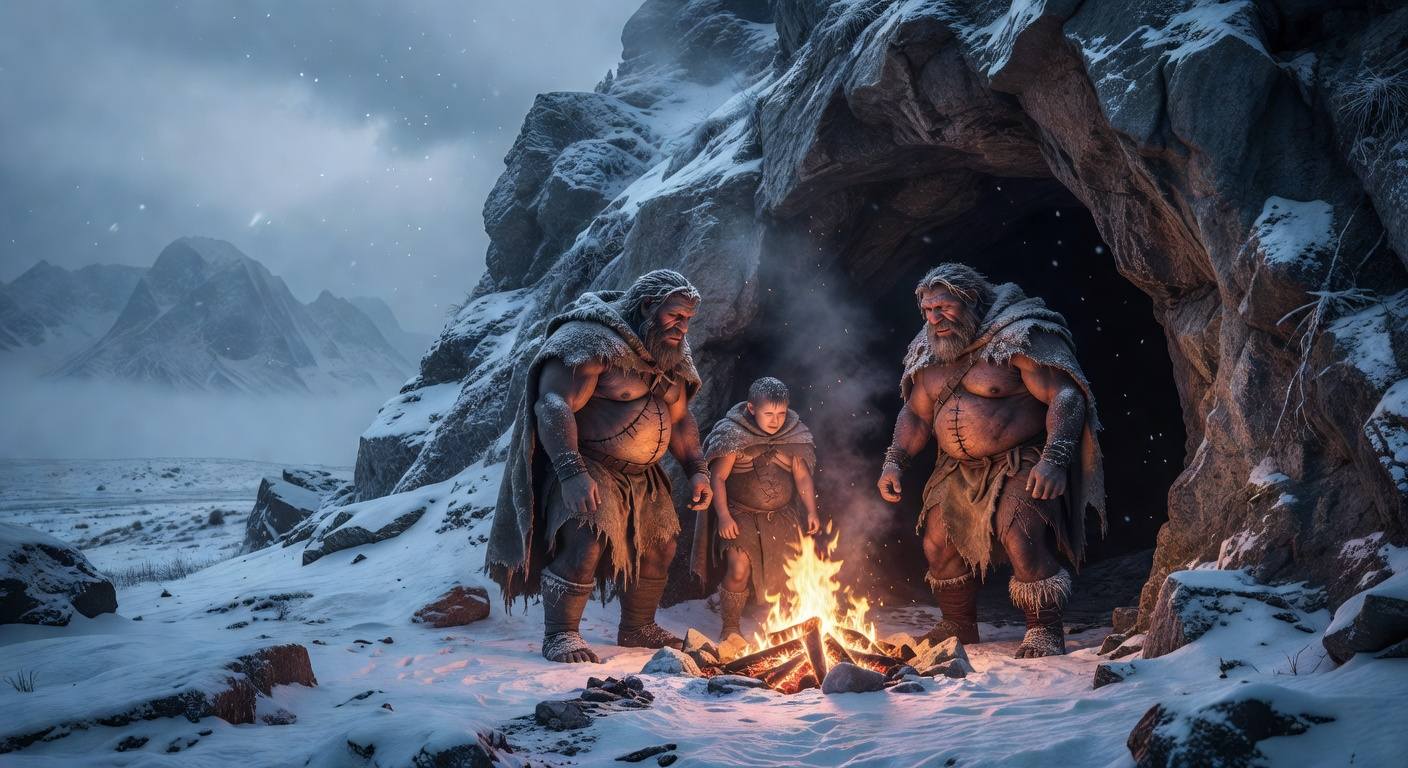
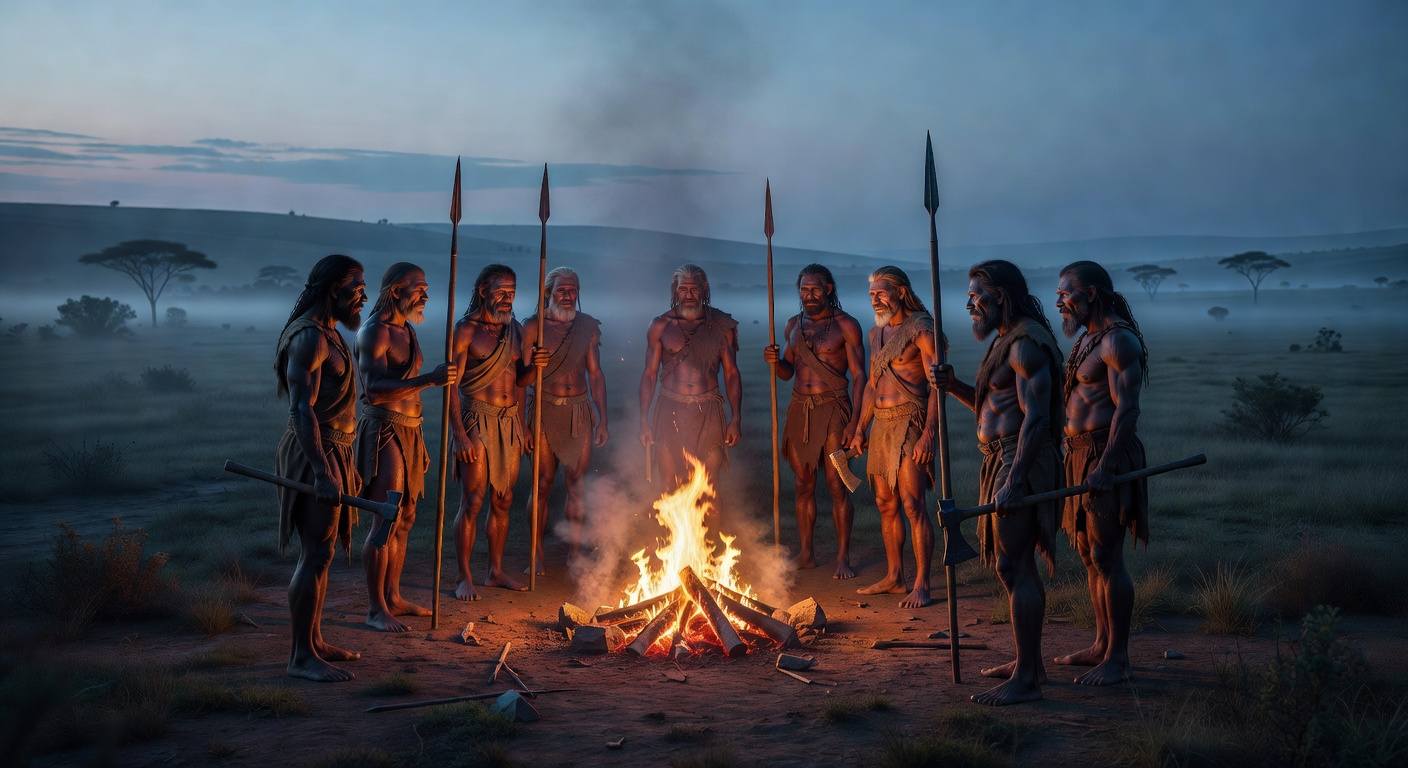
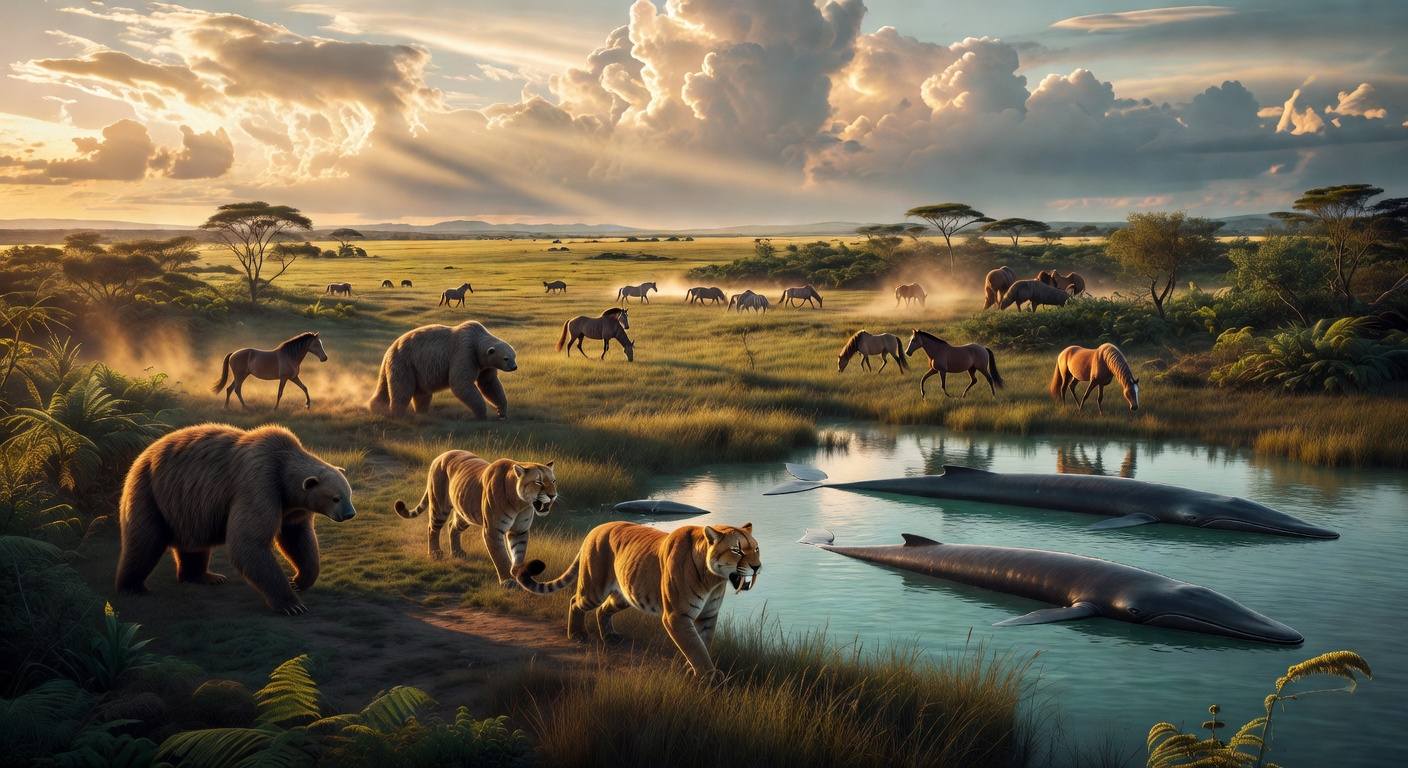
A reconstruction of Neanderthal life in the cold, demanding landscapes of Pleistocene Europe — skilled hunters, tool-makers, and people who buried their dead with care.
Gallery
Timeline of the Neanderthal World
| Time | Event |
|---|---|
| ~430 kya | Neanderthal lineage emerges |
| ~120–50 kya | Peak Neanderthal culture |
| ~70–50 kya | Sapiens arrive in Eurasia |
| ~42–40 kya | Neanderthals disappear |
Why the Neanderthals matter
Neanderthals had language, art, complex technology, and social care. They were not a failed version of us. They were a successful, parallel solution to the problem of being a large-brained hominin in a difficult world.
The discovery that we carry Neanderthal and Denisovan DNA shattered the old idea of a clean, linear human story. We are hybrids. Our genome is a record of ancient meetings and mixtures that still shape who we are.
Even after Neanderthals disappeared as a distinct population, pieces of them continued — and continue — in the bodies and immune systems of billions of living people. In the Gaia story, that is a kind of immortality.
The ones who would tell the whole story.
While Neanderthals still lived in Europe, a new population of Homo sapiens was developing in Africa with the full package of modern cognition — symbolic art, complex language, and the capacity for long-term planning. These were the people who would eventually inherit the entire planet and begin to understand its 13.8-billion-year history.
Sources & Further Reading
Frequently Asked Questions
Did Neanderthals and Homo sapiens really interbreed?↓
Yes. Multiple independent studies of ancient and modern DNA have confirmed that interbreeding happened in at least two major episodes. Most people outside Africa carry 1–2% Neanderthal ancestry as a result.
Were Neanderthals less intelligent than us?↓
There is no evidence for that. Their tools, hunting strategies, and symbolic artifacts show comparable cognitive sophistication. The idea that they were brutish is a 19th- and 20th-century myth that genetics has thoroughly dismantled.
Why did Neanderthals go extinct while we survived?↓
It was likely a combination of factors: smaller total population, greater vulnerability to climate swings, and competition with larger, more mobile sapiens groups who were arriving with new technologies and social networks. There was no single cause.
What does it mean that Neanderthals are still inside us?↓
It means the old story of a clean replacement was wrong. Human evolution has always involved mixture and exchange. We are the product of many different hominin lines that met, competed, and sometimes merged over deep time.